Description:
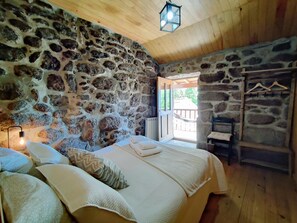
Casa Boletus is a two-bedroom house with two double bedrooms, a sofa bed and the option of adding an extra single bed in one of the bedrooms.
It also has an outdoor area with a barbecue, Smart TV and Wi-Fi. Bed linen and towels are provided.
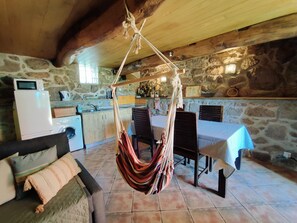
The kitchen is fully equipped. In the bathroom, you will find spare towels, a hairdryer and toiletries. The covered veranda overlooking the Laboreiro River valley is the perfect place to relax.
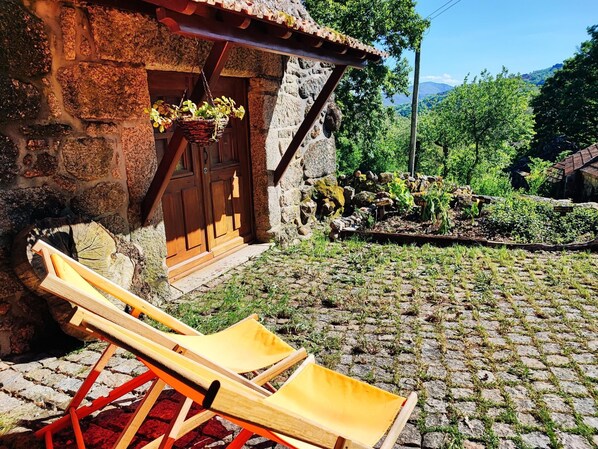
Here, you can choose to take a nap in the hammock or enjoy an aperitif while sitting in the outdoor armchairs.
Casa Boletus is the ideal place to relax and set off on adventures in nature!
Discover this picturesque location...
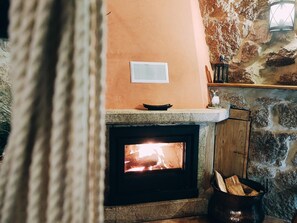
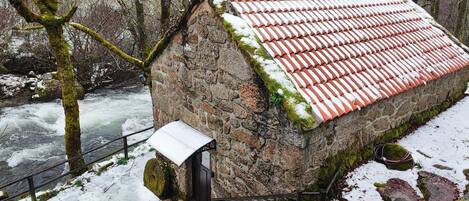
Casa Boletus is located in Bago de Baixo, one of the most scenic winter pastures in Castro Laboreiro, currently uninhabited.The brandas and inverneiras are part of an ancient system of transhumance. The Inverneiras are the places chosen by the Castrejas communities to spend the winter and are located in the valley at altitudes between 700 and 900 metres. The brandas are the villages where the Castreja communities traditionally spend the summer and are located on the plateau, above 1000 metres in altitude. Bago de Baixo is a winter settlement located in the Laboreiro River valley, protected from the harsh cold. Casa Boletus faces south, which allows for several hours of sunlight with a breathtaking view over the Laboreiro River Valley. The Laboreiro River is 200 metres from Casa Boletus, allowing for a short walk and a dip in the crystal clear natural waters. One kilometre from the trail (10 minutes by car) there is a large lagoon known locally as ‘Poço do Contador’ and a few metres further up, the Pontes Waterfall offers an idyllic place for swimming and diving. In Bago de Baixo and its surroundings, there are walking trails approved by the Portuguese Camping and Mountaineering Federation, classified as short routes (PR), for example the Castrejo trail (17 km), or the Grande Rota (GR) which crosses the entire Peneda Gerês National Park (PNPG) from Castro Laboreiro, passing through Soajo, Vila do Gerês to Montalegre. The restoration of Casa Boletus took advantage of the original design and its architectural project combined tradition with comfort.
By purchasing and restoring the house, the owners realised a dream and fulfilled a long-standing passion for Castro Laboreiro, which grew stronger over decades through collecting and identifying wild mushrooms and undertaking countless mycological excursions throughout the region. Castro Laboreiro has an exceptional diversity of mushrooms, including numerous species of Boletus, one of the most emblematic being Boletus edulis, which, due to its fleshy body, is known in the region as “cu gordo” (fat guy). These mycorrhizal fungi play a very important role in the forest ecosystem, as the roots of the fungi and those of the trees establish symbiotic relationships in which both benefit. The mycelium of the fungus spreads for kilometres, allowing the tree to capture more nutrients and, in return, the tree, mainly oaks, provides food for the fungus.
The name Casa Boletus is a tribute to Mother Nature!
Video: